Copilot Studio Shows How to Scale Agentic Transformation

Updated: Sep 21

Agentic transformation is more than a buzzword; it is the next operating model for teams that want AI to produce measurable outcomes instead of prototype demos. Microsoft used its latest Copilot Studio release to show how a managed agent platform can link AI experimentation to secure deployment, letting IT keep governance while business leaders track ROI in real time. The announcement underscores why we are bullish on agent-first roadmaps: it keeps your data, orchestration layers, and compliance guardrails under one roof rather than a tangle of disconnected bots. It also confirms that speed-to-value comes from a structured pipeline, not from skipping the controls that make scale possible.

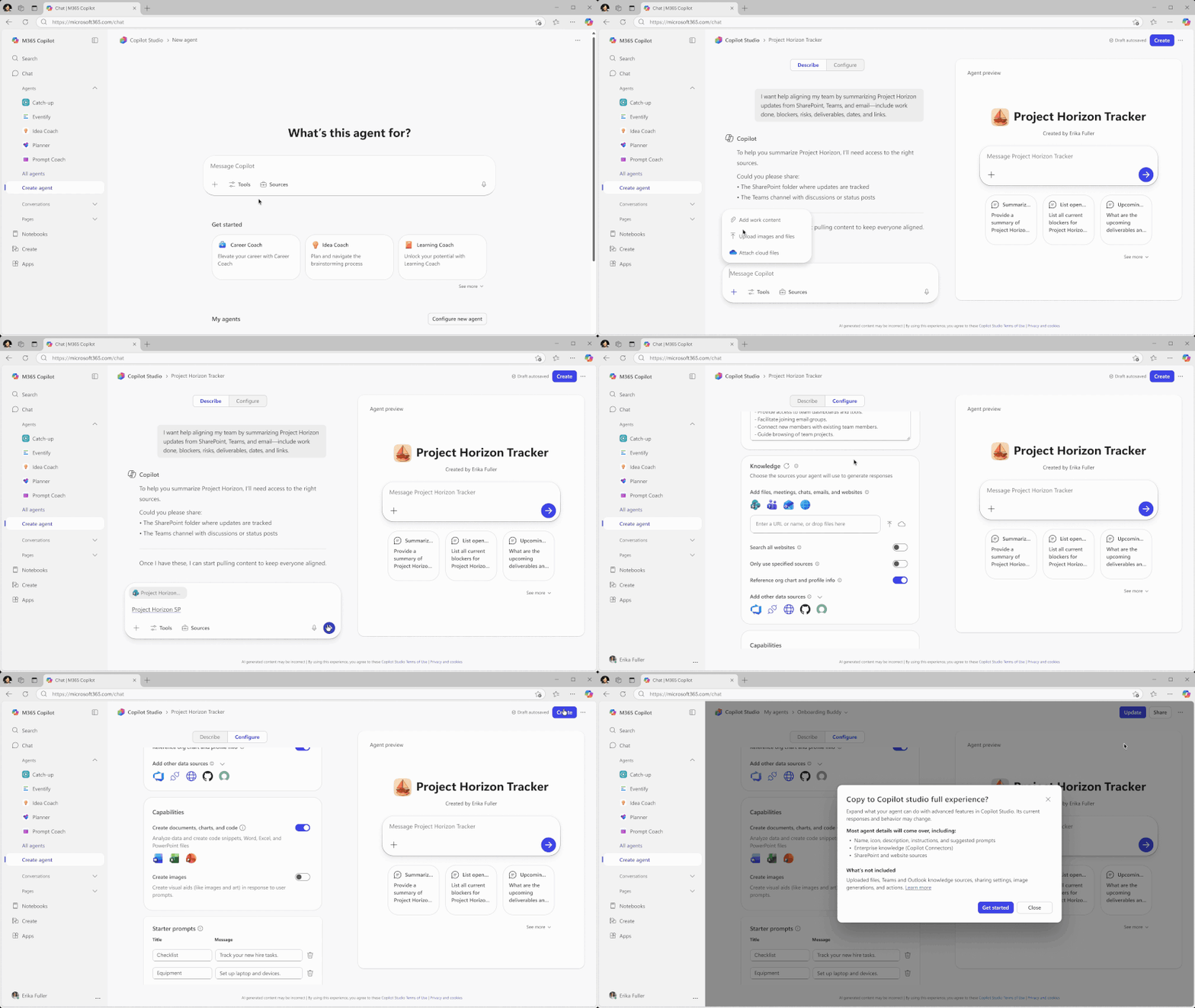
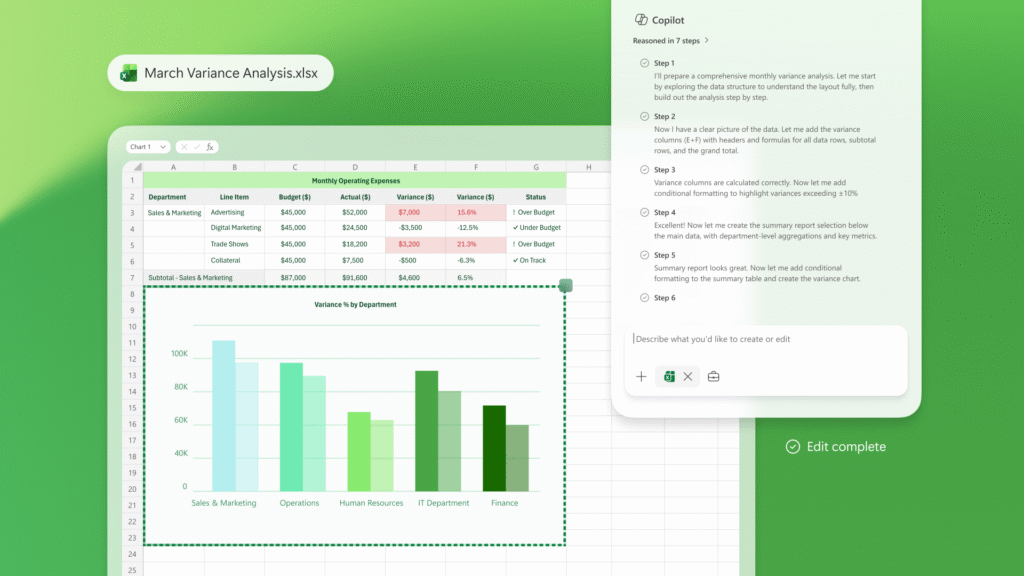
Microsoft is also smoothing the on-ramps for everyday Copilot users. The redesigned creation experience inside Microsoft 365 Copilot now guides people through a conversational setup that plugs in authoritative work knowledge, so even non-technical teams can shape helpful agents. Natural-language file generation for Word, Excel, and PowerPoint removes the drag of formatting deliverables after Copilot drafts the logic. And when those lightweight builds need more power, the one-click upgrade path into Copilot Studio keeps momentum going without dumping anyone back into a blank canvas. The new Workflows agent even lets employees describe triage routines, digest builders, or approvals in chat and instantly save them as automations.
Professional makers get an equally meaningful bump. Copilot Studio now lets builders choose among top-tier models such as GPT-5, Anthropic Sonnet 4.5, and Opus 4.1 depending on the task, which is huge for organizations that want different reasoning styles across finance, support, or product teams. Built-in Evaluations provide the regression testing teams begged for, comparing versions against real-world scenarios with easy-to-read metrics. Microsoft also unlocked “computer use” so agents can act across websites and apps using Windows 365-hosted browsers or Cloud PC pools, which makes browser automation and code execution safer to operationalize. Taken together, these additions mean we can design agents with deliberate intelligence and confidence in how they behave between releases.
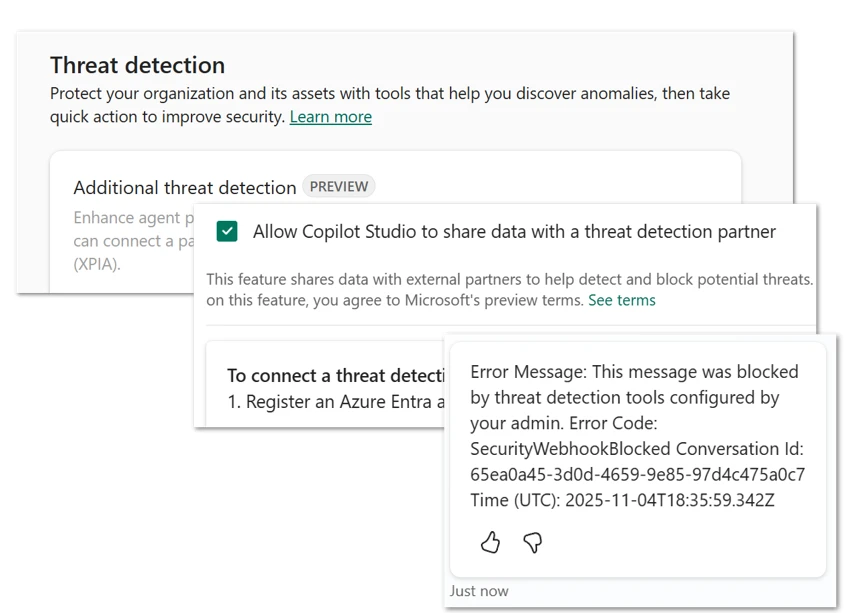
Administrators get equally rich governance upgrades. Expanded analytics now call out Copilot Credit consumption, surface AI-written recaps of the top insights, and let ops teams interrogate dashboards via natural language. Real-time protection arrives through native hooks into Microsoft Defender and other security tools, so prompt-injection attempts or anomalous behaviors get quarantined fast. The new Microsoft Entra Agent ID assigns an identity to every agent created in Copilot Studio, giving security and compliance teams traceability that auditors actually trust. This is the level of oversight enterprises have been asking for before letting agents touch high-stakes workflows.
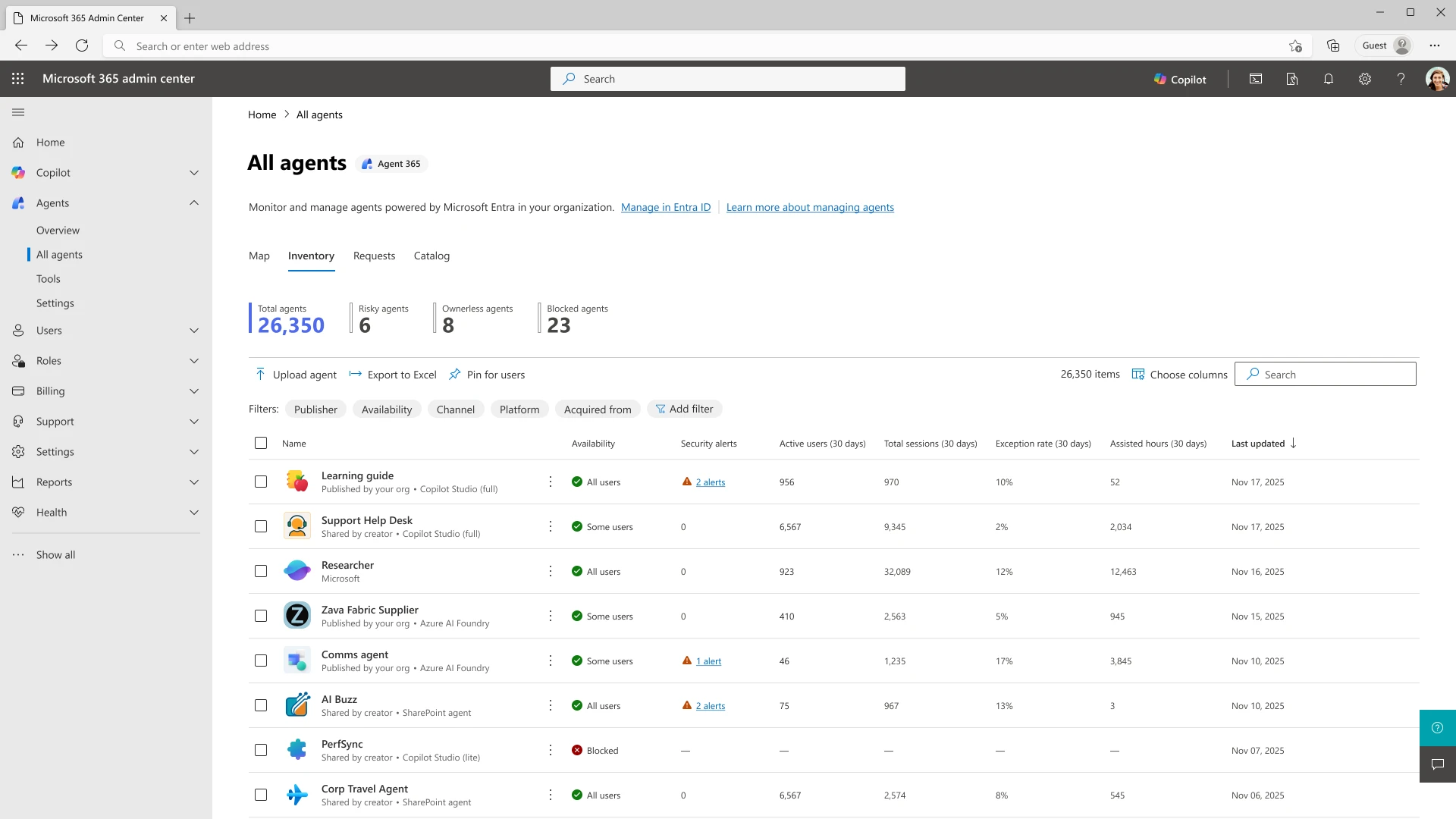
Agent 365 ties the story together by layering a unified control plane on top of all those agents. From the Microsoft 365 Admin Center, leaders can inventory tens of thousands of agents, spot security alerts, zone environments, and enforce connector policies without bouncing between consoles. Builders can also have Copilot Studio agents tap new Agent 365 MCP servers to schedule Teams meetings, draft Word docs, send Outlook emails, or update Dynamics 365 records with built-in audit trails. That combination of orchestration plus granular policies is what makes multi-agent strategies sustainable instead of duct-taped.
If you want proof that this matters, look at EY’s PowerPost Agent results: a 95 percent reduction in lead time and a 37 percent cost savings on journal processing. The team behind it says tasks that once took minutes now finish in seconds, which is the whole point of investing in a repeatable, auditable agent platform. Microsoft’s Dan Lewis—whose roadmap stewardship is featured alongside this announcement—has been reinforcing those lessons with every customer briefing we have attended. Stories like this remind us that the gap between a pilot and production is closed when governance, automation, and measurement live in the same stack.
For teams charting their next steps, Microsoft is giving away plenty of homework: an Agent Readiness Assessment that scores strategy, data, process, culture, and security, plus the broader Copilot Studio adoption center filled with best practices. We see these tools as accelerators, not marketing fluff, because the sooner you benchmark your maturity the faster you can prioritize what to fix. If you are serious about agentic business transformation, let this release be your cue to align IT, operations, and domain leads on a cohesive roadmap—preferably before your competitors do the same.


Comments